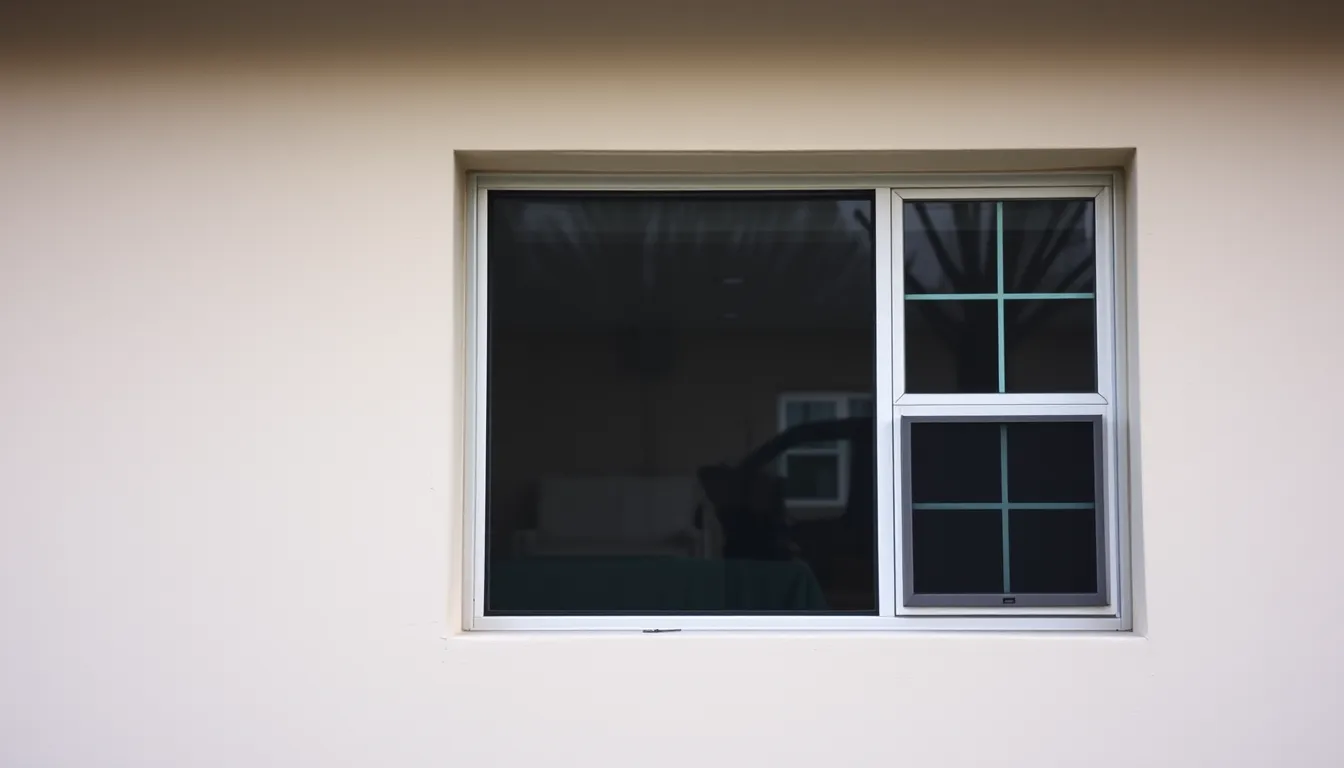
Replacement is the one decision in this trade where a homeowner can easily spend five figures on the wrong thing. Not because the product is bad, but because the two methods — retrofit and full frame — solve different problems, and the difference is decided by the wall the window is sitting in rather than by the window itself.
That decision is the one worth getting right. What each method actually does, what it costs you in disruption, when the extra work of a full frame is the only honest option, and when a replacement quote you have already received is solving a problem you do not have.
Retrofit versus full frame, in plain terms
Retrofit leaves the original frame in the wall. The old sashes come out, the new unit is set into the existing jamb, and the exterior stop and interior trim are either retained or replaced with a cover. On a stucco house this is the reason the stucco survives untouched. It is faster, it is cheaper, and on a sound aluminium frame from the 1970s or 1980s it is usually all that is needed.
Full frame removes the entire unit back to the rough opening — the framed hole in the wall. New flashing is integrated with the weather barrier, the opening is shimmed and squared, and the exterior finish is made good afterwards. On stucco that means cutting back the finish around the opening and patching it, which then has to cure and be painted to blend. It is more work, more disruption, and more money, and it is the correct answer when the old frame has failed or the opening was never right.
The decision turns on three checks: is the existing frame straight and sound, does the existing opening drain water correctly, and is the wall assembly behind the frame intact. If all three pass, retrofit. If any fails, full frame is not an upsell — it is the only repair that will hold.
What replacement actually fixes
It fixes failed glass and failed seals. That is the most common and most honest reason. A unit that has fogged internally, or whose seal has failed so it no longer insulates, is beyond repair as a unit and replacement is the direct fix.
It fixes operation. A window that will not open, will not latch, and cannot be repaired because the parts no longer exist, is a window that has reached the end of its serviceable life. Older aluminium sliders in particular reach a point where the hardware is simply unavailable.
It fixes water entry — but only if the water was coming through the window assembly rather than through the wall above it. A window that leaks during a storm because the flashing at the head is wrong is not fixed by a new window; it is fixed by correcting the flashing, which on a stucco wall means full frame work.
It improves comfort and noise modestly. A modern insulated unit with a selective coating is noticeably better than a failed 1975 slider on both counts. It is not a transformation, and we will not describe it as one.
It does not fix a hot room on its own. Shade, ventilation and roof insulation carry more of that load than glazing does.
Stucco is the detail that changes the job
Most of the housing in Carlsbad and the surrounding towns is stucco over wood frame. That matters because stucco is a drainage plane in its own right and it is finished in three coats that are difficult to blend invisibly. A retrofit avoids touching it entirely. A full frame replacement has to cut it, integrate new flashing behind it, and then rebuild it.
The flashing detail is where replacement jobs fail. Water that gets behind the stucco at the head of a window has to be directed out over the new unit, not into the wall cavity. That means a proper head flashing with a drip leg, sill pan flashing that slopes outward, and a weather barrier that laps correctly behind both. When a replacement is done without those, the window looks perfect for two years and then the interior drywall starts to show a stain at the top corner.
What moves the price
The variables are consistent from job to job: how many openings, their size, whether the method is retrofit or full frame, the glass specification, second storey access, and how much stucco patching and interior trim work the job needs. A single storey tract home with standard openings is the simplest case. A hillside house with tall narrow windows above a slope is the other end.
We quote a written range after seeing the openings, not before. A phone number for a whole-house replacement without an inspection is not a quote, it is a guess that gets revised upward later.
Replacement questions
What is the difference between a retrofit and a full frame replacement?
A retrofit keeps the existing frame in the wall and sets a new sash and glass into it. The exterior stops and the interior trim usually stay, which is faster and cheaper. A full frame replacement takes the whole unit out back to the rough opening, which is the right answer when the original frame is rotted, out of square, or when the opening needs new flashing. Retrofit is limited by how true the old frame is; if the jamb is bowed the new sash will not seal properly no matter how carefully it is set.
Will a new window actually lower my energy bill?
Somewhat, if the old unit is a single pane aluminium slider with failed weatherstrip. Modestly, if it is a sound double pane unit. The physics is that glass is the weakest part of the envelope and it always will be; a new window improves the weakest wall, it does not turn a hot room cool. If a west facing bedroom is unbearable in September, the larger wins are shading and attic ventilation, not glazing. We say this before quoting because a homeowner who buys windows expecting a dramatic bill change is a homeowner who feels misled.
How long does a whole-house replacement take?
A typical single storey house with twelve to sixteen openings is two to three days for the install itself, plus lead time for the units. Two storey homes and stucco walls take longer because access and patching are more involved. We do not remove every window on day one and leave the house open; each opening is finished and sealed before we move on, so the house stays weathertight overnight.
Do you have to cut the stucco?
For a retrofit, no — that is the main reason retrofit is popular on stucco homes in North County. The new unit fits inside the existing opening and the stucco stays intact. For a full frame replacement on a stucco wall, yes: the stucco around the opening has to be cut back to the sheathing so the new flashing can be integrated with the weather barrier, and then the stucco is patched and the patch has to cure and be painted to match. That patching is real work and it is priced honestly rather than hidden in a line item.
What glass should I choose?
In this climate a low solar heat gain coefficient matters more than the U value, because cooling load dominates and heating load is small. A spectrally selective coating that blocks heat without darkening the room is usually worth the difference over clear glass on west and south elevations. On north facing glass the upgrade buys very little. Tempered glass is required by code near doors, in doors, and in large panes close to the floor, and that is not optional.
Get the openings looked at before you decide
Call (442) 287-1412. We will tell you whether your frames can take a retrofit or whether the wall is pushing you to full frame, and we will put it in writing.